On This Day · 24 years ago
Napa Napa: The first major shipment sails to Papua New Guinea
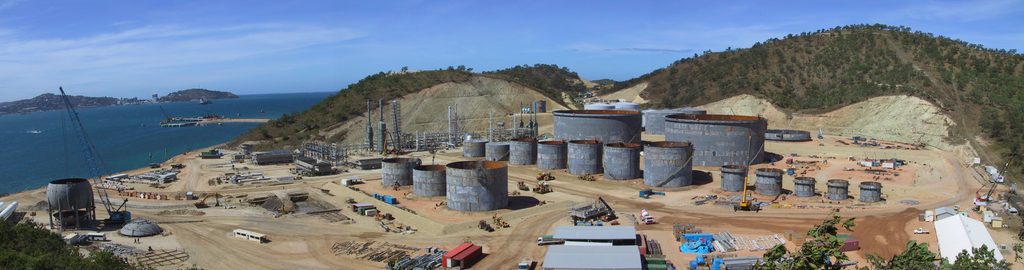
Twenty-four years ago today, the first major shipment of refinery equipment left Port Arthur, Texas, bound for InterOil’s Napa Napa site across the harbour from Port Moresby. The cargo weighed more than 1,000 metric tons, and it was expected to reach Papua New Guinea that December.[1] The refinery was meant to help complete and reached practical completion on 31 January 2005 and became the country’s only full-spectrum refinery.[3]
24
Years ago
The report The road to Napa Napa Its place in the story What followed Sources
December 2002
expected shipment arrival in Port Moresby[1]
01 / THE ANNOUNCEMENT
1,000 tons bound for Port Moresby
The shipment sailed on 29 October 2002. It was a milestone event for InterOil and the refinery project in Papua New Guinea, with completion of the project then expected in the fourth quarter of 2003. The refinery was designed to process 32,500 barrels per day, enough to cover Papua New Guinea’s domestic market and leave roughly 35% of volume for export, secured by contracts with Shell Overseas Holdings. BP Singapore was the exclusive agent for crude supply.[1]
“Houston, we have lift-off”
Alexander Nairn, then InterOil’s General Manager, Projects
Quoted in InterOil’s announcement, 30 October 2002.[1]
An original historical summary of the published announcement, not a reproduction of the publisher’s article. Read the original ASX announcement
A note about the anniversary
This page remembers the departure on 29 October 2002. The announcement that records it is dated 30 October 2002. An earlier Oil & Gas Journal report (March 2001) said the crude unit came from Chevron’s former Nikiski, Alaska refinery. It said the separate reformer and hydro-desulfurisation units came from a former refinery in Oklahoma, and that the equipment had been shipped to Beaumont, Texas, for inspection and refurbishment. [1][2]
02 / THE CHRONOLOGY
The road to that October voyage
Behind a single sailing lay a government agreement, a license, a crude supply contract, OPIC financing and a refurbishment programme. This is the story behind the shipment.
29 May 1997
15 February 2000
The processing facility license is granted
The Department of Petroleum and Energy grants the license to construct, refurbish, install and commission the refinery at Napa Napa.[2]
23 March 2001
Export marketing and shipping arrangements
Commercial arrangements are put in place to export refinery products. By October 2002 the export volumes were described as secured by Shell and other spot sale contracts.[1]
21 December 2001
29 October 2002
This anniversary
The voyage begins
The day the first major shipment of refinery equipment, over 1,000 metric tons, departed Port Arthur, Texas, bound for InterOil’s refinery site under construction in Papua New Guinea. [1]
Dates are shown only as precisely as the cited record supports.
03 / THE INTEROIL STORY
Why this moment matters
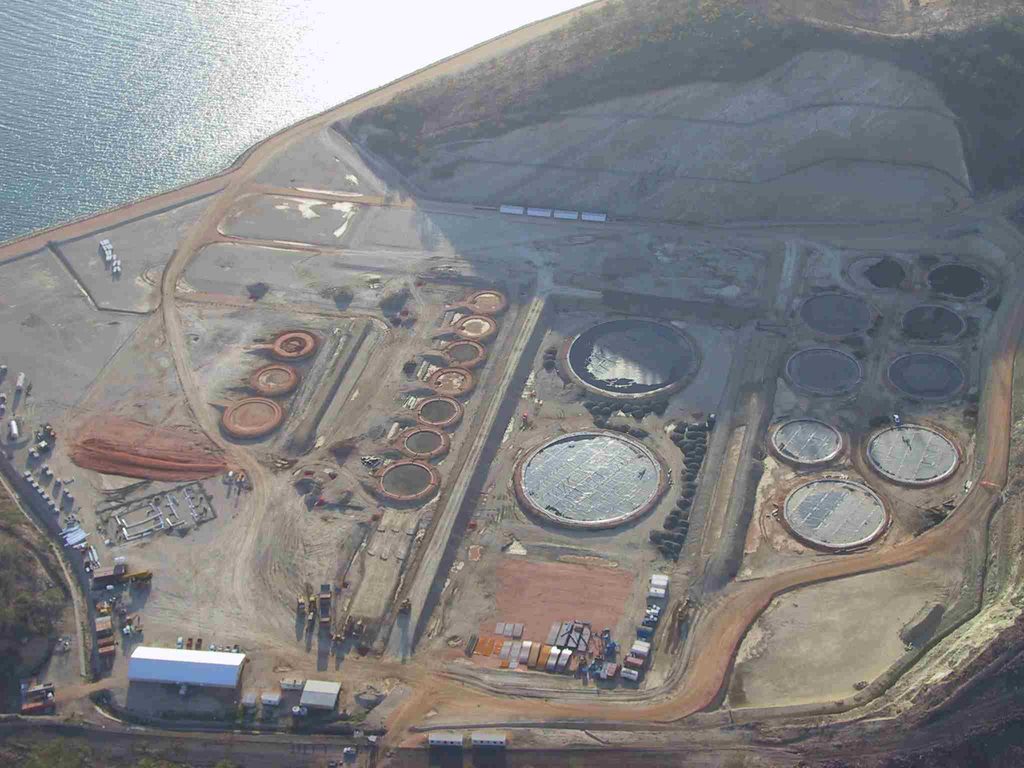
By autumn 2002, the Napa Napa refinery had licenses, a crude supply contract, an export framework and financing in place. What it still lacked was the plant itself. The Texas departure was the point at which the project moved from paper arrangements to physical equipment on the water. It also publicly signalled that the financing and contracts from the previous months were becoming hardware. Phil Mulacek secured the OPIC ( Overseas Private Investment Corporation a division of the US Government – funded by the US Treasury) financing that paved the way to reduce political risk to Papua New Guinea.
The refinery was always intended to be more than a single plant. InterOil described a plan to build an integrated oil business across refining, exploration and downstream assets, with Papua New Guinea as its core focus. That same announcement noted that the company was then the second-largest holder of exploration acreage (over 9 million acres) in the country.[1] The shipment belongs to the first stage of that story.
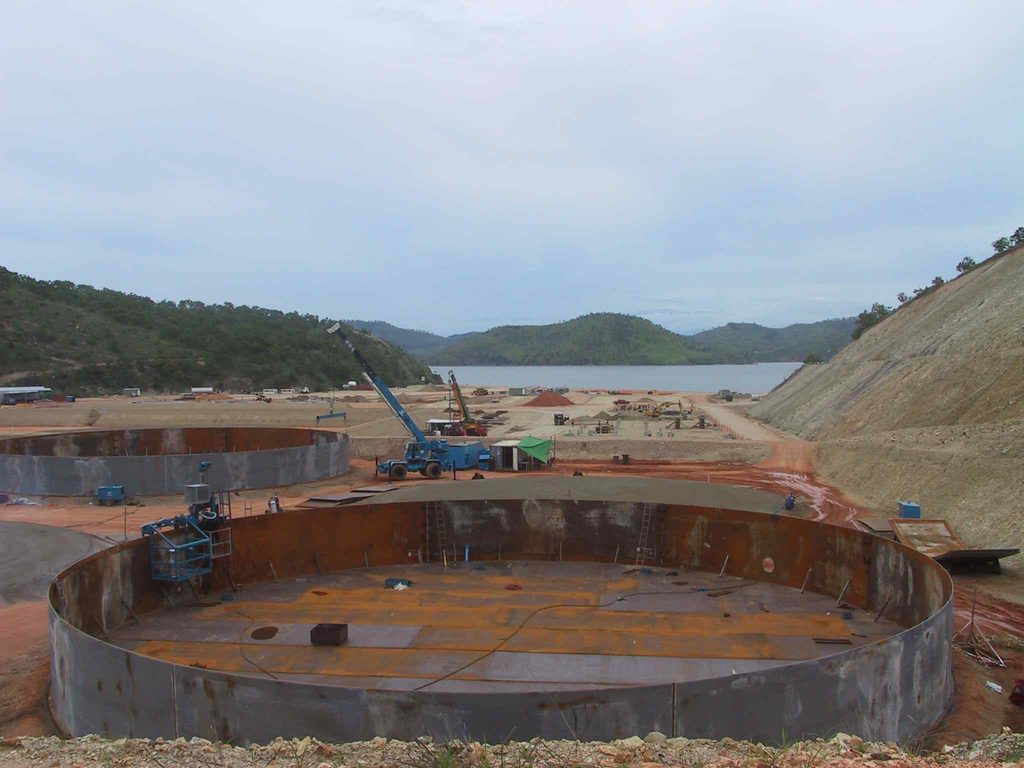
It was a milestone, not a finish line. The 2002 announcement looked ahead to arrival in December 2002 and completion in late 2003. Both were forecasts, and the record shows the program took longer but overcame the Asian Financial Crisis and other Geopolitical hurdles.
04 / WHAT FOLLOWED
From a ship at sea to a working refinery
December 2002
Expected arrival
The shipment is expected at Port Moresby.[1]
16 June 2004
First crude arrives
The first crude oil shipment reaches the refinery’s marine terminal.[4]
August 2004
First sale of refined product
The first delivery of refined product is loaded onto a ship from the InterOil marine facility for the domestic market.[5]
31 January 2005
Practical completion
The refinery completes its reliability and performance tests and the construction contractor hands it over.[3]
2005
Its first year
The refinery averages 20,655 barrels per day of crude throughput and processes 11 crude cargoes.[3]
10 February 2013
The 100th crude cargo
Napa Napa discharges its 100th crude cargo, a 650,000-barrel parcel from Kutubu, nine years after its first cargo discharged in June 2004.[6] InterOil received a plaque from BP recognizing no lost-time injuries (LTI) and no environmental incidents since start-up, with more than 56 million barrels of crude processed, at a total value of over US$4.9 billion. InterOil distributed fuel products to 50 retail sites, 8 seaboard terminals, 2 inland ports and 11 aviation facilities in the country.
The Refinery End Game
The ultimate post-refinery turnaround upgrades created a refinery capacity of over 42,000 bbls per day throughput. Producing saleable products: Propane, Butane, Light-, medium, and heavy–naphtha, finished gasoline, Jet Kerosene, Diesel, and LSWR (low sulphur waxy residue).
That is the moment worth remembering: a ship leaving Texas with the first of the heavy equipment, and the years of work are set in motion.
Remembering the people behind the record
The dates tell only part of the Napa Napa story. Behind the shipment were over 2,400 employees and contractors across InterOil: the engineers, fabricators, shipping teams, contractors and landowner communities who turned used equipment from the United States into Papua New Guinea’s first refinery.
Reading the numbers
The 32,500 barrels per day figure is the refinery’s rated capacity, not what it actually ran. In 2005, its first full year, average throughput was 20,655 barrels per day. The completion dates in the 2002 announcement were forecasts. Practical completion was declared on 31 January 2005.[3]
From the archive
This post draws on InterOil’s ASX announcement of 30 October 2002, contemporary industry reporting and InterOil’s later annual information forms.
The historical record
Sources & further reading
1
First Major Shipment of Refinery Leaves Texas for New Guinea
InterOil · 2002-10-30.
2
InterOil builds first refinery in Papua New Guinea
Oil & Gas Journal · 2001-03-19. Article on InterOil’s US$180 million hydro-skimming refinery in Napa Napa, on the western side of the Port Moresby Harbor.
3
Annual Information Form — year ended 31 December 2005
InterOil Corporation / SEC EDGAR. 2006-03-31. BP Singapore agreement, practical completion, 2005 throughput.
4
Offshore Technology · First crude shipment, 16 June 2004.
Historical research prepared 26 October 2026. This retrospective distinguishes the departure date from the announcement date and treats completion dates in the 2002 announcement as forecasts. No historical photograph has been substituted from another project. External archive links may require a subscription or sign-in.
5
PNG refinery gives InterOil a leg-up
Energy News Bulletin · 11 August 2004 · First delivery of refined product
6
The National · 11 February 2013 · Napa Napa marked its 100th crude shipment, with no accidents (LTI’s) or oil spills since operations began in 2004.
Historical research prepared 11 October 2026. This retrospective distinguishes operational dates from report dates and avoids treating a test rate as proved reserves or sustained production. No historical photograph has been substituted from another well. External archive links may require a subscription or sign-in.