On This Day · 20 years ago
Elk-1: a test result worth remembering
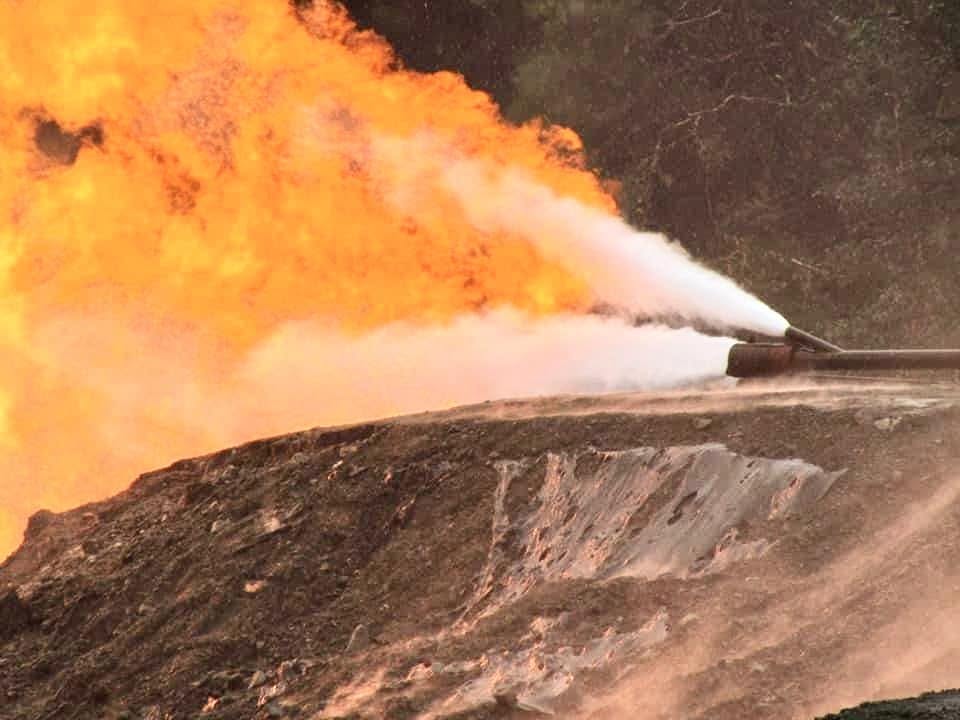
Twenty years ago today, Upstream reported encouraging results from InterOil’s Elk-1 gas discovery in Papua New Guinea: a gas flow of 21.7 million cubic feet per day, accompanied by condensate.[1] The Elk-1 well later flowed at a record rate of 102 million cubic feet of gas per day, placing it as the highest gas well flow rate in Papua New Guinea’s history.[6]
20
Years ago
The report The road to Elk-1 Its place in the story What followed Sources
01 / THE REPORT
A promising result from Elk-1
The 25 October report described gas flowing through a small choke from a highly permeable, fractured reservoir, with condensate measuring 46° API. InterOil was preparing the well for a long-term production completion, then expected to take another two to three weeks.[1]
“We are very encouraged by these early test results”
Phil Mulacek, then InterOil’s chief executive
Quoted by Upstream, 25 October 2006.[1]
An original historical summary of the published report, not a reproduction of the publisher’s article. Read the contemporary report ↗
A note about the anniversary
This page remembers the report published on 25 October 2006. The October testing occurred earlier: a GLJ assessment records a sample collected during DST #2 on 10 October, and the same maximum flow result appeared in Oil & Gas Journal on 20 October. The available records do not establish the exact day of the maximum flow step.[1] [2] [5]
02 / THE CHRONOLOGY
The road to that October headline
Behind that October headline lay an exploration license, seismic surveys, a new rig and months of demanding well operations. This is the story that led to the report.
7 March 2003
The exploration ground is secured
PPL 238, the license containing Elk-1, is granted to InterOil.[3]
2004
Seismic work investigates the prospects
InterOil completes seismic work across the Puri, Elk and Moose prospects.[3]
25 February 2005
Funding backs an eight-well programme
An amended participation agreement provides US$125 million for eight exploration wells in Papua New Guinea.[3]
October 2005
A rig built for the task
InterOil acquires its purpose-built, helicopter-portable Rig #2, capable of drilling to 13,500 feet.[4]
19 February 2006
Elk-1 begins drilling
The well is spudded in the Eastern Papua Basin, targeting fractured limestone on the Elk structure.[4]
May 2006
A parallel gas-development ambition
InterOil signs a memorandum of understanding with Papua New Guinea’s government concerning domestic natural-gas processing, ahead of a definitive project agreement.[4]
11 June 2006
High-pressure gas changes the programme
Gas is encountered at 5,543 feet. The well is shut in while additional well-control equipment is mobilised.[3]
June 2006
The first drill-stem test
The first test flowed gas at a rate of 7.1 million cubic feet per day. A subsequent, deeper test significantly surpassed this milestone, recording a maximum flow rate of 21.7 million cubic feet per day.[2]
15 September 2006
Drilling resumes
After well-control work and rig reconfiguration, drilling resumes using managed-pressure drilling.[3]
7 October 2006
The well reaches total depth
InterOil’s annual filing records total depth at 6,504 feet.[3]
10 October 2006
A dated record from the second test
A later GLJ technical report identifies a gas sample collected during Elk-1’s second drill-stem test on this date.[5]
20 October 2006
The October result is already in print
Oil & Gas Journal reports a maximum gas rate of 21.7 million cubic feet per day from the second test.[2]
25 October 2006
This anniversary
The report remembered today
Upstream publishes its account of Elk-1’s encouraging test results. This is the publication anniversary marked by this page.[1] Elk-1 was later tested and flowed at a record rate of 102 million cubic feet of gas per day and 510 barrels of condensate a day. [6]
Dates are shown only as precisely as the cited record supports. A month-only entry does not imply a verified day within that month.
03 / THE INTEROIL STORY
Why this moment matters
Seen in the wider InterOil story, Elk-1 belongs to the period when a business with refining and fuel-distribution operations was pursuing the scale of its upstream opportunity. By 2006, its refinery was operating and the company was also exploring a future in natural-gas processing.[4]
The importance of the October result was therefore not simply the number in the headline. It gave the exploration story a tangible point of reference: a tested well, followed by completion and appraisal. Later technical assessment placed Elk-1 at over 102 million standard cubic feet of gas per day, creating the beginning of the Elk discovery and the wider Elk–Antelope exploration story.[3] [4] [5]
Those were encouraging test results, not a declaration that commercial production had begun. The distinction matters: testing a well, estimating a resource and establishing commercial reserves are different milestones. InterOil’s later filing still described the need for further drilling and development before proved reserves could be assigned.[4]
04 / WHAT FOLLOWED
The next chapter was appraisal
That is the moment worth remembering: not the end of the work, but a result that made the next questions worth pursuing.
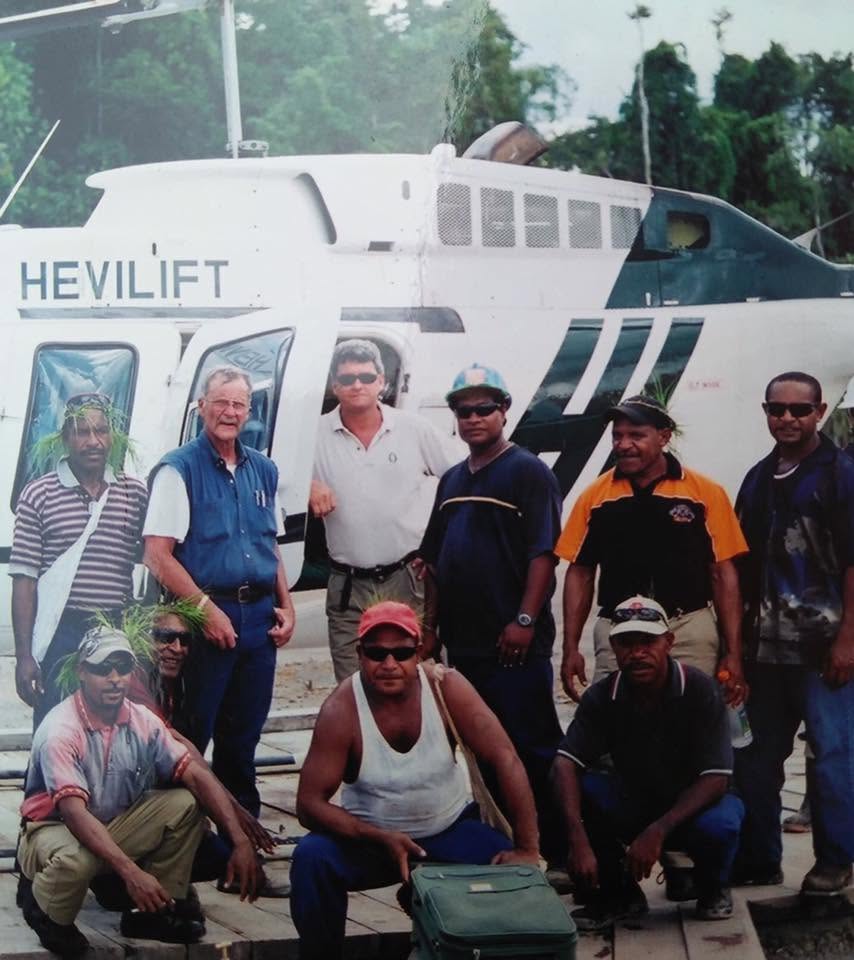
Remembering the people behind the record
The numbers tell only part of the Elk-1 story. Behind it were the people who drilled, tested and supported the well.
Reading the numbers
The headline rate is a test result, not a forecast of sustained field production. Subsequent appraisal and development were separate stages.[4] The 21.7 million standard cubic feet per day was a drill stem test rate; a later flow test reached 102 million cubic feet per day.[6]
From the archive
This post draws on Upstream’s report on 25 October 2006, later InterOil filings and a third-party technical assessment.
The historical record
Sources & further reading
1
Upstream · 2006-10-25. Published 25 October 2006, 03:39 GMT.
2
More work set at Papuan gas-condensate find
Oil & Gas Journal · 2006-10-20. Article dated 20 October 2006; paragraphs describing DST 1 and DST 2.
3
Annual Information Form — year ended 31 December 2006
InterOil Corporation / SEC EDGAR. Printed pp. 10, 15–16, 40 and 42: 2004 history; PPL 238; 2006 exploration; material contracts.
4
Annual Information Form — year ended 31 December 2007
InterOil Corporation / SEC EDGAR · 2008-03-28. Printed pp. 10–12: upstream history, refinery and liquefaction.
5
Elk / Antelope resource assessment — effective 31 December 2009
GLJ Petroleum Consultants (archived copy on Scribd). Executive summary; Initial Reservoir Conditions and Fluid Properties, printed p. 28 (immediately before the p. 29 marker in the text extraction).
Third-party-hosted archival copy of the GLJ report.
6
InterOil’s gas well blasts record
Hart Energy · States that Elk-1 tested in 2006 at 102 million cubic feet of gas and 510 barrels of condensate per day.
Historical research prepared 11 October 2026. This retrospective distinguishes operational dates from report dates and avoids treating a test rate as proved reserves or sustained production. No historical photograph has been substituted from another well. External archive links may require a subscription or sign-in.