On This Day · 19 years ago
Elk-4: An appraisal well that found Antelope
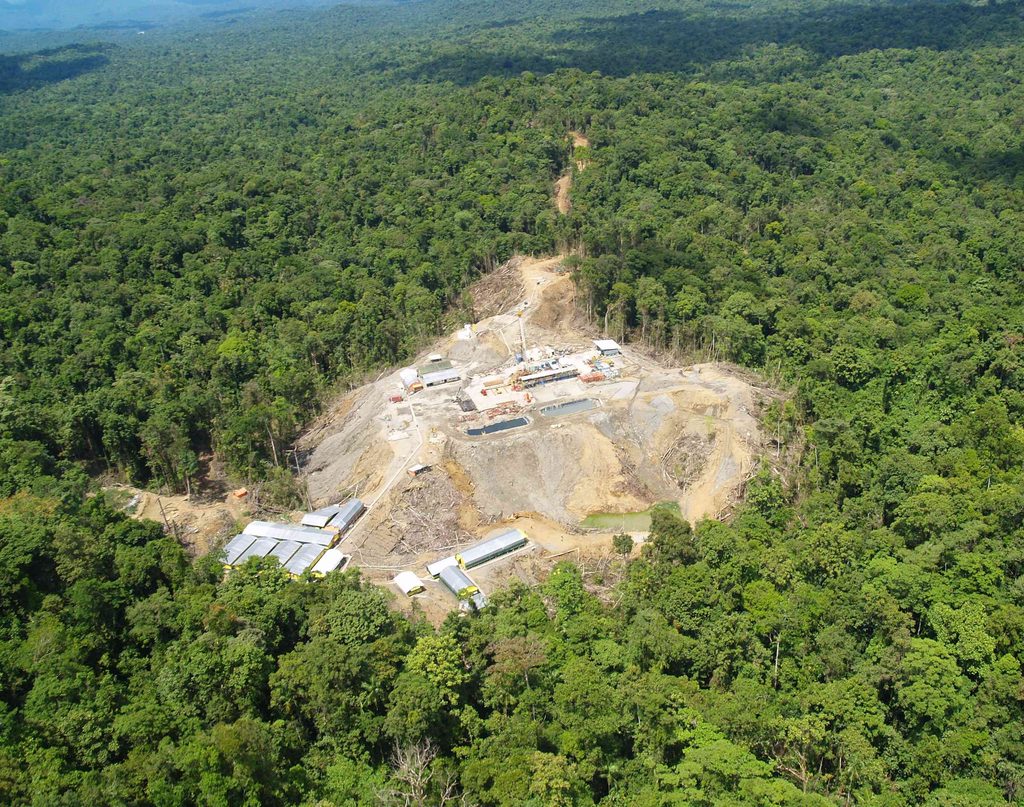
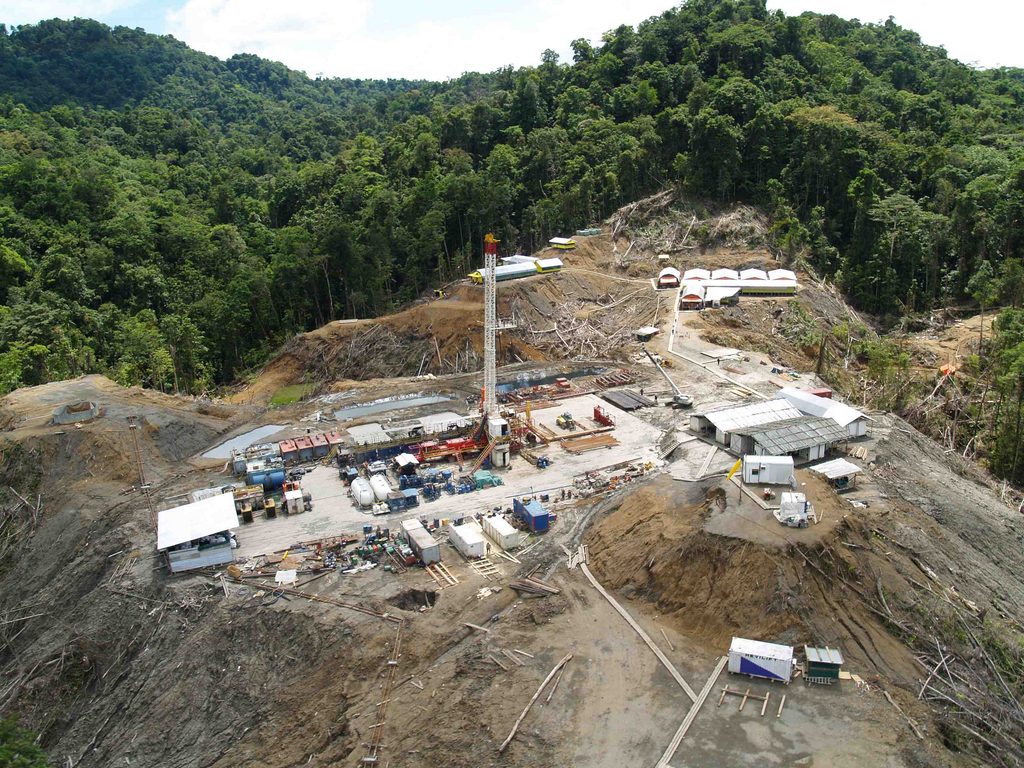
Nineteen years ago today, InterOil spudded the Elk-4 appraisal well in Papua New Guinea. It was planned as a test of the Elk fractured limestone about 1.5 kilometres south of the Elk-1 discovery.[1] The well did more than test Elk. On 1 May 2008, while drilling at 7,402 feet (2,256 metres), it produced a gas kick and discovered a separate structure that the company named Antelope.[2] On 4 September 2008, it recorded a short-term flow rate of 105 million standard cubic feet of gas per day.[2]
19
Years ago
The report The road to Napa Napa Its place in the story What followed Sources
PPL 238
Where Elk-4 was spudded[2]
01 / THE SPUD
A well with two jobs
By late 2007, InterOil had a gas and condensate discovery at Elk-1 and an appraisal well, Elk-2, that had not flowed at commercial rates. Elk-2 sat 4.7 kilometres north of Elk-1, which had penetrated the reservoir below the gas-water contact.[1][2] The next appraisal step went south.
The Elk-4 well was planned to test roughly 2,500 metres (8,125 feet) of the Elk fractured limestone, 1.5 kilometres south of Elk-1, with the option to test the base of a structure called Antelope. The Elk-3 designation was reserved for a planned mid-structure Elk target to build reserve/resource volumes in the Elk structure. Elk-#3 had been deferred, so the third Elk well became Elk-4.[1] Elk-4 was an appraisal well to the Elk Target, but an exploration well below the Elk fault block, targeting the base Antelope structure.[1]
“intersect the underlying Antelope structure”
Phil Mulacek, then InterOil’s chief executive
Quoted in Energy News Bulletin, at the time of the spud.[4]
An original historical summary of the published announcement, not a reproduction of the publisher’s article. Read the original ASX announcement
A note about the spud date
A popular version of this story says Elk-4 was drawn up only to test the southern edge of Elk and then drilled through a thrust fault into the base Antelope structure. The record is more interesting than that. InterOil’s 2007 seismic programme (12 lines, 144 miles, acquired between January and mid-October 2007) had already pointed to a major fault separating the southern part of Elk into a different structure, which the company named Antelope. The seismic also suggested a reef on that structure.[1] At spud, the company said it hoped to intersect the base of the Antelope structure.[4]
The drill bit supplied in 2008 provided that confirmation. Seismic had mapped the Antelope structure, and Elk-4 showed gas and liquids in it. This page therefore describes the well as one that was planned to reach and test the Antelope structure, not one that stumbled on it.
02 / THE CHRONOLOGY
From an eight-well programme to a spud
Elk-4 sits at the end of nearly three years of programme building, one dramatic well-control event and a seismic campaign. This is the path to the 15 November spud.
April 2005
The eight-well exploration programme begins
InterOil starts the exploration programme covering the three licenses.[3]
February 2006
Elk-1 spuds
Drilling starts on the Elk-1 exploration well in PPL 238, using the company’s purpose-built heliportable rig.[3]
11 June 2006
7 October 2006
Total depth
Elk-1 reaches 6,504 feet after drilling resumes on 15 September. [3]
23 November 2006
Elk-1 completed as a potential producer
Testing and logs indicate and confirm a large gas accumulation, and the Elk-#1 well is completed as a potential producer. [3]
January to October 2007
The Elk appraisal seismic
A CGGVeritas crew mobilizes on 15 January 2007 and completes 12 lines totaling 144 miles by mid-October. [1]
February 2007
15 November 2007
This anniversary
Elk-4 is spudded
InterOil spuds Elk-4, about 1.5 km south of Elk-1, to test the Elk Puri and Mendi limestones and continued drilling to intersect the underlying Antelope structure. [4]
Dates are shown only as precisely as the cited record supports.
03 / THE INTEROIL STORY
Beyond a routine step-out
Elk-1 had shown that the Elk limestone could hold a lot of high-pressure gas. It had not shown that the gas could be tied to a development. In the company’s 2007 reporting, the LNG plant planned for Napa Napa was predicated on at least a substantial part of its gas coming from Elk and Antelope, and a final investment decision depended on appraisal and exploration drilling there.[1] Every well was therefore also a test of the larger plan.
The geology made Elk-4 more important than a routine step-out. InterOil later described the Elk block as sitting over the northern end of the Antelope block. Elk is a tectonic wedge, or over thrust, of highly fractured deep-water limestone. Antelope, penetrated later by Antelope-1, is mainly a shallow-water reef and platform complex with a dolomite cap and well-developed secondary porosity.[2] A well drilled south of Elk-1 could pass through the over thrust and into the Antelope base structure underneath. That was the objective Mulacek described.[4]
04 / WHAT FOLLOWED
From a spud to a discovery
1 May 2008
A gas kick and a discovery
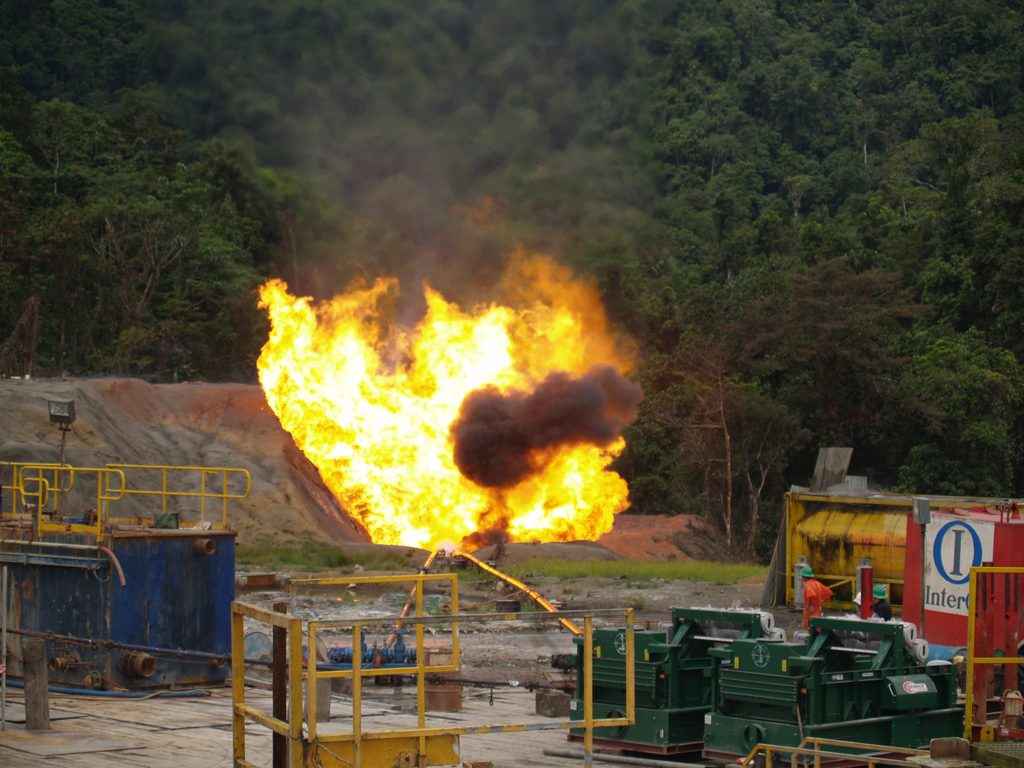
While drilling at 7,402 feet (2,256 metres), the well kicked and flowed natural gas and natural gas liquids to the surface. This was a discovery in the Antelope structure.[2]
31 August 2008
Completion
The well is completed with 4½-inch tubing as a potential producer.[2]
4 September 2008
A short-term flow test at 105 mmscfpd
After completion work finished on 31 August, the well recorded a short-term gas flow rate of 105 million standard cubic feet per day, plus condensate.[2] CBS MoneyWatch, reporting on a company filing, put the test at about 105 million cubic feet of gas and around 2,000 barrels of condensate per day, and called it a record-high gas flow rate for Papua New Guinea.[5] This meant InterOil had the PNG record for both the Highest and second-highest flow test in PNG history. The Oil & Gas in PNG starts to wake up.
15 October 2008
31 December 2008 to 7 January 2009
Antelope-1 reaches gas
Gas is encountered at 1,748 metres. The well reaches 2,370 metres on 7 January, and logs indicate a gross reservoir of 611 metres with an average porosity of 8.4 per cent over 550 metres of net reservoir. The upper part has porosities of 30% to 32% for over 100 meters , and over 100 meters in the 20% to 30% range.[2]
31 December 2008
Resource estimates ranging from 8.2 Tcfe to over 15 Tcfe following Antelope #1 and #2
Following the testing & logging of World Record Antelope #2, the gas & condensate volumes expand vastly, with resource estimates ranging from 8.2 Tcfe to over 15 Tcfe
Earlier, after Elk-#4, GLJ Petroleum Consultants had estimated gross contingent gas resources alone at 2.32 Tcfe to 4.73 trillion cubic feet, with a median of 3.43 Tcfe.[2] on the Elk and base Antelope estimates.
2 March 2009
A far larger flow with 382 mmscfpd of gas and ~5,000 bbls/d of condensate
A short-term surface flow test of Antelope-1 gives an estimated 382 mmscfpd of gas and about 5,000 barrels per day of condensate. This Antelope #1 overtook the PNG first-place record, giving InterOil the top 3 records in the country. This World Record woke up every major and national oil company in the region, changing the demand for PNG forever.[2]
Later years (2017)
From discovery to joint venture
Appraisal drilling continued through wells such as Antelope-6 and Antelope-7. By 2017 the Elk-Antelope fields, in a joint venture operated by Total S.A., were the basis of the Papua LNG project.[6]
That is the moment worth remembering: that Elk-#4 was a well spudded to test the gas column below Elk, aimed at a structure that would soon become known as Antelope.
Remembering the people behind the record
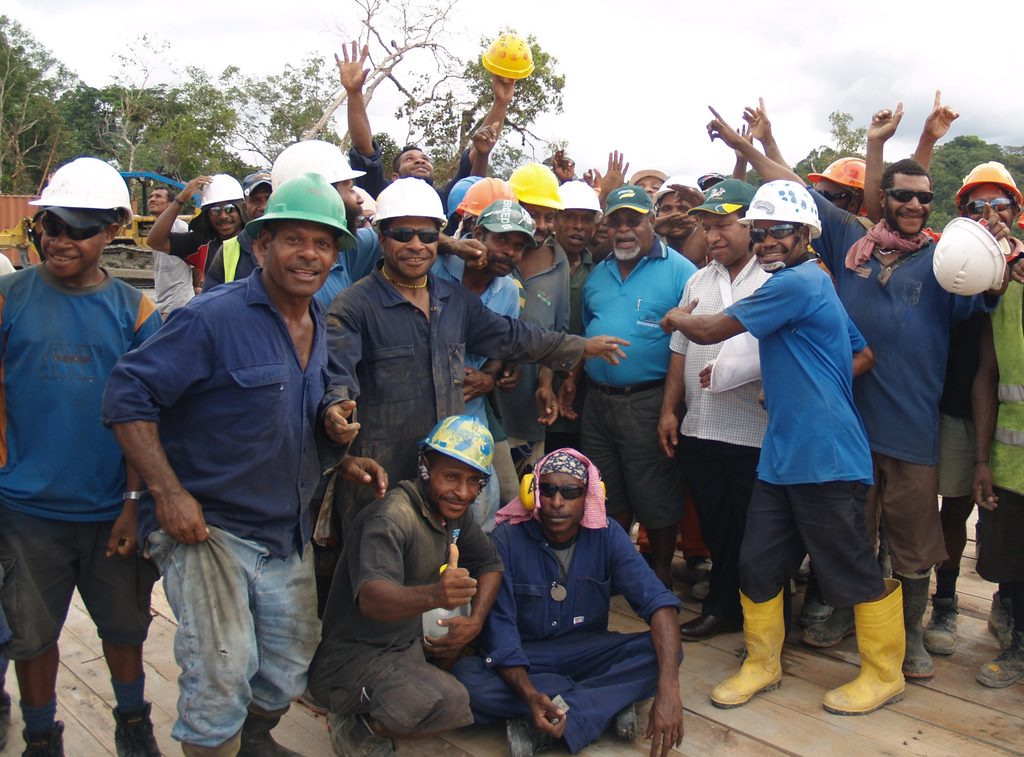
The dates tell only part of the Elk-4 story. Behind the well were the geologists, drillers, seismic crews, helicopter pilots, camp staff, landowner communities and company teams who worked in remote Papuan terrain, using a heliportable rig, to reach a gas column more than a kilometres and a half below.
Reading the numbers
The 105 mmscfpd figure is a short-term test rate from a completed well. It is not a production rate, and it is not a final reserve estimate, which ranges from 8 tcfe to over 15 tcfe. Depths are as reported while drilling and have not been reconciled between measured and vertical depth to a minor degree. The planned depth of Elk-4 appears as about 2,500 metres in the company’s annual disclosure [1] and 2,400 metres in the press report at spud. [4] Later resource estimates for the Elk-Antelope fields varied between certifiers and changed as appraisal wells were drilled, so the 2008 figures here describe a point in time. Potential buyers would naturally try to lowball the gas & condensate numbers, to keep the upside to themselves.[6]
From the archive
This post draws on contemporary Energy News Bulletin reporting of Elk-4’s spud, InterOil’s annual disclosure for 2006, 2007 and 2008, CBS MoneyWatch coverage of a company filing, and a 2017 management information circular.
The historical record
Sources & further reading
1
Management’s Discussion and Analysis, year ended 31 December 2007
InterOil Corporation / SEC EDGAR · filed 28 March 2008. Elk-1 well control, Elk-2, appraisal seismic, Elk-4 spud and plan.
2
Annual Information Form, year ended 31 December 2008
InterOil Corporation / SEC EDGAR · filed 27 March 2009. Elk-4 gas kick, 105 mmscfpd, Antelope-1, geology and resource estimate.
3
InterOil Corporation / SEC EDGAR · filed 8 June 2007. Eight-well programme and the Elk-1 well history.
4
Energy News Bulletin. Elk-4 location, target depth and aims, as stated at spud.
5
InterOil Readies Antelope-1 Site for Drilling
CBS MoneyWatch · 13 October 2008. Elk-4 test rate and condensate.
6
Management Information Circular, 13 January 2017
InterOil Corporation / SEC EDGAR. Later Elk-Antelope appraisal history.
Historical research prepared 30 October 2026. This retrospective distinguishes the planned aims of Elk-4 from its later results and treats all early flow rates and resource figures as test or contingent values. No historical photograph has been substituted from another project. External archive links may require a subscription or sign-in.