Long before Papua New Guinea established itself as a major global LNG exporter, its vast gas potential was largely a collection of unproven theories. Navigating that uncertainty required a sustained, high-risk exploration and drilling program to venture into frontier areas where commercial viability remained entirely unknown.
InterOil stepped up to test those possibilities, kickstarting an aggressive exploration campaign that ultimately shifted the trajectory of the nation’s energy sector.
At the core of this transformation was the discovery of the massive Elk-Antelope gas fields in Gulf Province. Led by Phil Mulacek, the InterOil team spearheaded the critical, early-stage operations that defined PNG’s true resource scale during the company’s most active discovery era.
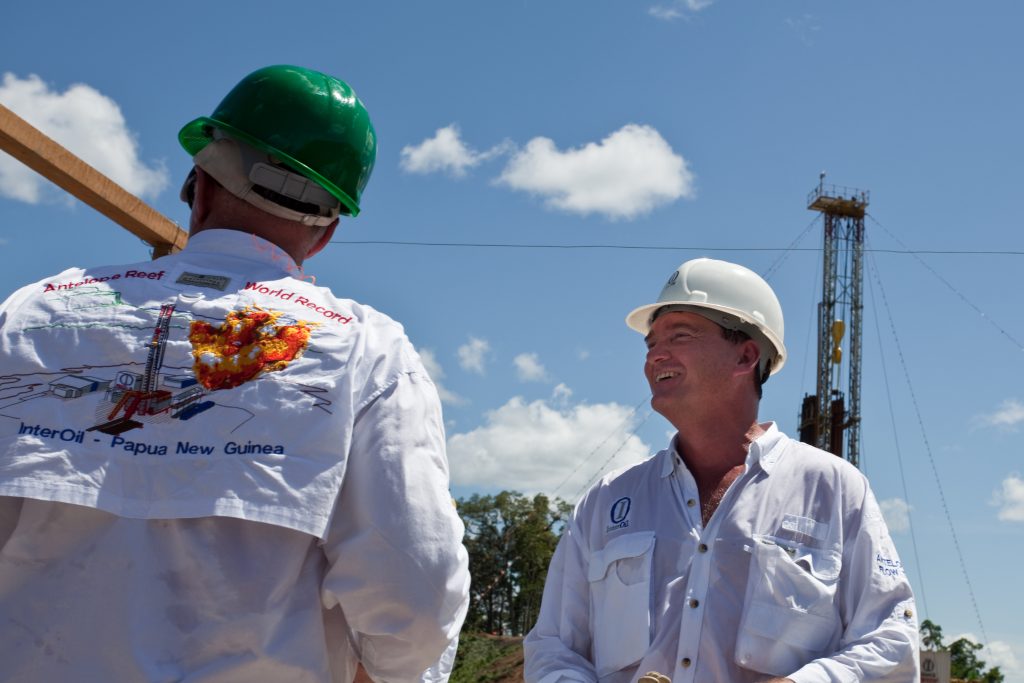
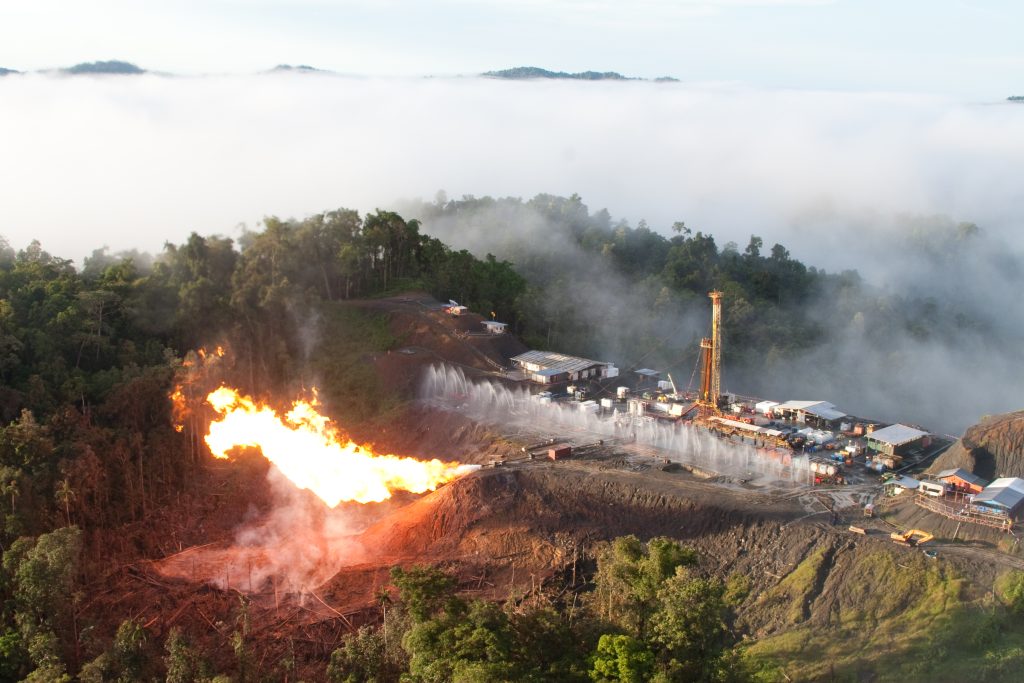
The first definitive glimpse of this world-class potential emerged at the Elk-1 well site, where a drill stem test clocked an absolute open flow rate of 150 mmcfd. Building on that initial momentum, exploration pushed deeper into the neighboring Antelope structures.
Subsequent appraisal wells quickly confirmed that they were dealing with a massive, contiguous reservoir system.
The evaluation at Antelope-1 turned heads by flowing at up to 705 million cubic feet per day (mcfd), while the Antelope-3 well drilled through a staggering hydrocarbon column measuring roughly 2,301 feet (701 metres).
Unearthing a resource of this magnitude immediately shifted the narrative from asset exploration to commercial development strategy.
Moving Elk-Antelope down the line toward actual liquefied natural gas production demanded intense capital injections, sprawling coastal infrastructure, and deep partnerships with global majors possessing the technical weight to pull it off.
A major regulatory milestone arrived in November 2012, when PNG’s National Executive Council gave the formal nod to a proposed 3.8 million tonnes per annum LNG plant design tailored for the Gulf Province.
As the project matured into a large-scale international development, InterOil’s operational footprint naturally evolved. The company systematically diluted its equity and brought in major global partners to shepherd the asset toward commercial production, anchoring the multi-billion-dollar infrastructure projects defining PNG’s modern energy landscape.
Yet, InterOil’s legacy in the region extended well beyond the gas fields of the Gulf Province.
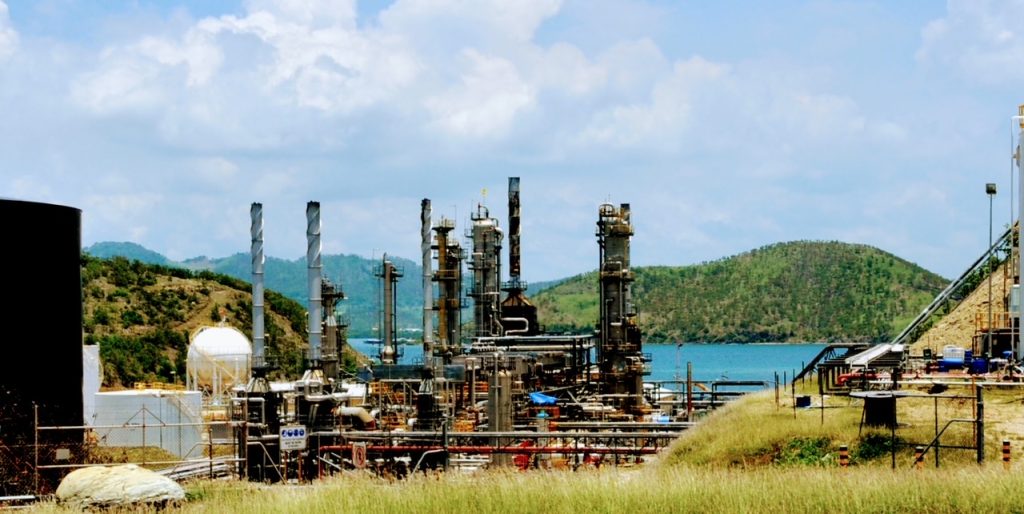
The company also drove the engineering and construction of the Napa Napa refinery in Port Moresby—securing its spot as the country’s very first commercial oil refinery and providing critical domestic downstream capacity.
Alongside these industrial footprints, the company maintained a consistent presence in local development by bankrolling community health, infrastructure, and schooling programs throughout the Gulf Province.
InterOil spent years drilling wells and testing remote fields at a time when the broader commercial future of PNG gas was highly debated.
The definitive proof delivered by the Elk-Antelope discovery paved the way for the country to step out from the shadow of modest oil production and transition into a global LNG powerhouse.
For a more detailed account of InterOil’s history and the development of PNG’s gas industry, view the original article published on PNG Business News by Michael McWalter: “FROM PAPUA NEW GUINEA’S FIRST OIL AND GAS TO LNG”.
For further background on PNG’s transition from oil production to LNG and the development of the Elk-Antelope project: