Papua New Guinea’s first commercial refinery started operations at Napa Napa in June 2004, marking a historic shift achieved by InterOil Corporation.
Located across Fairfax Harbour from downtown Port Moresby, this landmark facility was engineered as a 32,500 barrel-per-day hydroskimming refinery built to process domestic crude into diesel, petrol, and jet aviation kerosene.
The venture was originally conceived by engineer Phil Mulacek during the 1991 Gulf War cleanup in Kuwait, where he learned about a mothballed Chevron refinery in Nikiski, Alaska.
Mulacek envisioned using this overlooked asset as the central piece of a fully integrated, independent petroleum company that would produce its own oil, refine it locally, and market the products directly to consumers.
Recognizing a unique opportunity, he purchased the asset, secured seed capital from far-sighted North American investors, and relocated the entire physical infrastructure across the Pacific to PNG.
To transform this ambitious vision into reality, the young company had to prove its credibility to the financial world and secure critical alliances with global energy giants.
InterOil successfully negotiated a regular crude supply agreement with BP and established a strategic downstream marketing pact with Shell. These alliances, combined with a highly persuasive business strategy, allowed the team to secure US$85 million in vital project financing from the US Government’s Overseas Private Investment Corporation (OPIC).
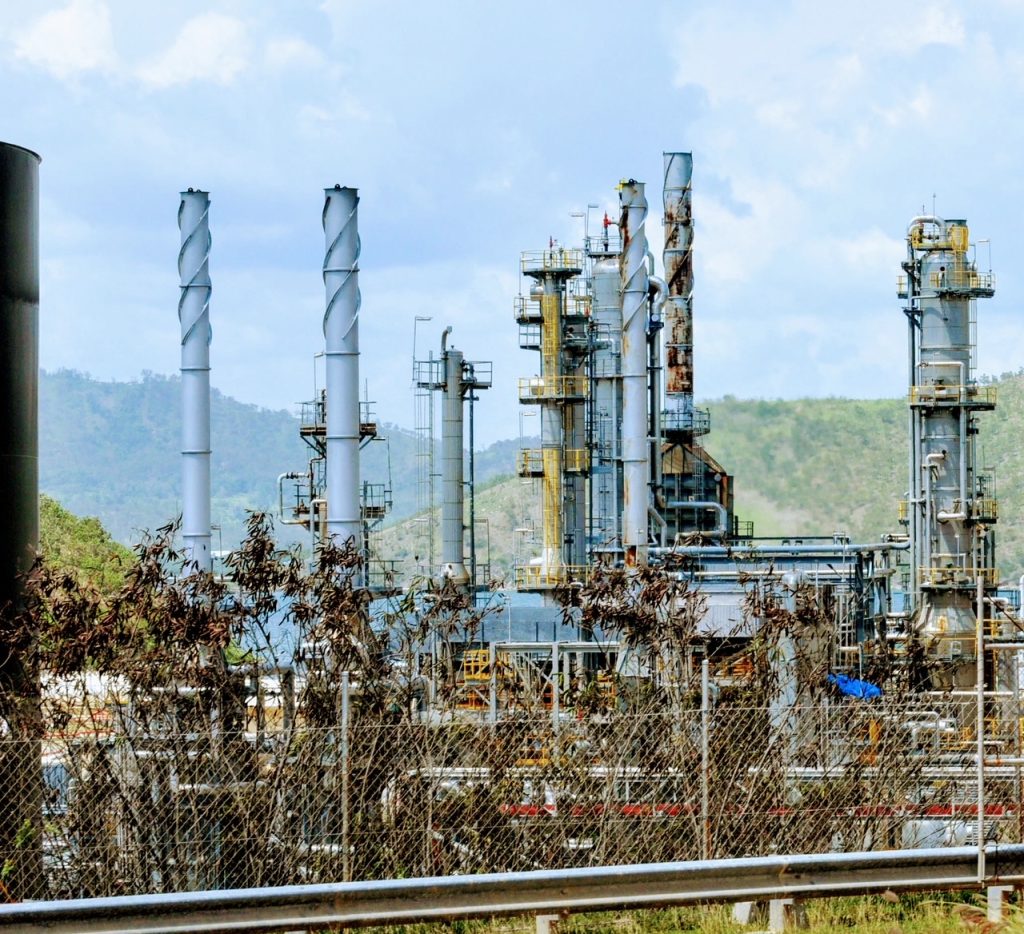
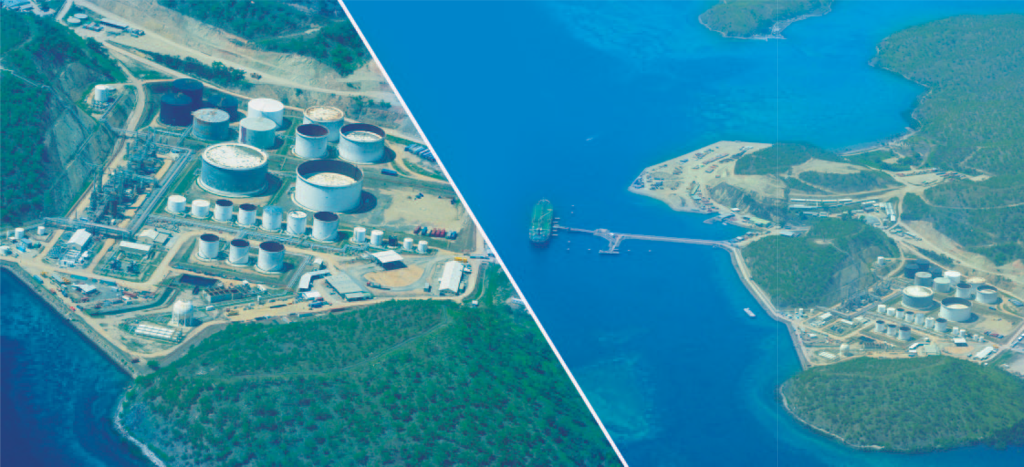
By mid-2004, the Napa Napa facility represented a total capital investment of US$214 million, making it the largest industrial development in PNG at the time.
Equipped with a 1.9-million-barrel total storage capacity and a deep-water jetty capable of docking tankers up to 110,000 dwt, the refinery began supplying the domestic market under a strategic import parity pricing agreement with the PNG government.
The achievement drew widespread praise from local leadership, with former Deputy Prime Minister Alan Marat noting that for many years, larger corporations had repeatedly told Papua New Guinea what could not be done.
“InterOil came and told us what could and would be done,” Marat stated, adding that the nation was “extremely proud that PNG now has its own refinery.”
Driven by the need to feed its new processing facilities with domestic crude, InterOil leveraged its integrated model to launch an aggressive upstream exploration campaign across 8 million acres.
While conventional oil majors focused heavily on proven western provinces, InterOil gambled on frontier blocks in the Eastern Papuan Basin.
By replacing expensive helicopter logistics with river-barge staging camps, the company managed to systematically drive down exploration costs, paving the way for a series of high-impact discoveries that completely redefined the country’s resource baseline.
This high-risk exploration strategy culminated in the monumental discovery of the Elk-Antelope gas fields in the Gulf Province.
Early drilling success at Elk-1 yielded a calculated open flow rate of 150 mmcfd, but it was the subsequent appraisal work at the Antelope structure that shocked the industry.
Testing at the Antelope-1 well produced an astonishing record gas flow rate peaking at 705 mmcfd, while Antelope-3 confirmed the scale of the reservoir by intersecting a massive hydrocarbon column of approximately 2,301 feet (701 metres).
These world-class discoveries transformed the young firm—pushing its total assets past US$260 million and its market capitalization over A$800 million—and ultimately laid the foundation for the multi-billion-dollar Papua LNG project.
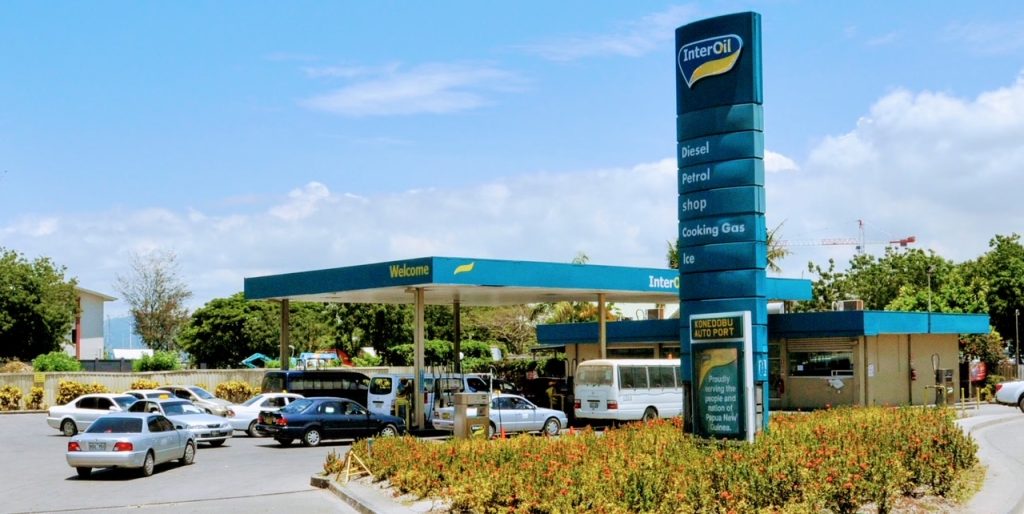
InterOil further consolidated its footprint by acquiring an efficient downstream network, absorbing both BP and Shell’s existing retail presence across the country.
InterOil proved that a dynamic, dedicated enterprise focused exclusively on one country could challenge major regional energy players.
By recruiting a highly seasoned management team hungry to make a tangible difference, the firm successfully paired structural project funding with top-tier technical expertise.
This bold operational footprint did more than secure upstream control and downstream capability; it established an enduring energy baseline right at the steps of the capital, lighting a sustainable path toward nationwide industrialization, secure local employment, and lasting economic opportunity for Papua New Guinea.
For a detailed account of InterOil’s history and the development of PNG’s early downstream energy industry, view the original article published on Paradise Inflight with Air Niugini (Vol 4 2004) by John Brooksbank: INTEROIL LIGHTS UP PNG – HERALDING A CHANGE FOR THE ECONOMY